As How to Avoid Plagiarism and Cite Your Sources Correctly takes center stage, this opening passage beckons readers into a world crafted with good knowledge, ensuring a reading experience that is both absorbing and distinctly original. Understanding and implementing these principles is crucial for maintaining academic and professional integrity, fostering trust, and contributing meaningfully to the scholarly discourse.
This comprehensive guide delves into the nuances of academic honesty, offering practical strategies and clear explanations to help you navigate the complexities of original work and proper attribution. We will explore what plagiarism truly entails, the various forms it can take, and the significant consequences of academic dishonesty. Furthermore, we will equip you with the essential skills to identify unoriginal content, implement effective avoidance techniques, and master the art of citation across diverse source types.
Understanding Plagiarism: What It Is and Why It Matters

Plagiarism is the act of presenting someone else’s work, ideas, or words as your own without proper acknowledgment. It is a serious academic and ethical offense that undermines the principles of scholarship and intellectual honesty. Understanding its various forms and consequences is crucial for maintaining academic integrity and fostering a culture of originality.At its core, plagiarism is a form of intellectual theft.
It disrespects the original creator’s effort and can lead to severe repercussions, impacting one’s reputation and future opportunities. Recognizing what constitutes plagiarism is the first step in avoiding it and ensuring that all written work is a genuine reflection of one’s own thought and research.
Forms of Plagiarism
Plagiarism manifests in several ways, each carrying the same weight of academic dishonesty. It is essential to be aware of these distinctions to prevent unintentional offenses and to understand the breadth of what is considered inappropriate academic practice.Here are the primary forms of plagiarism:
- Direct Copying: This is the most straightforward form, where text, images, or any other content is copied verbatim from a source without quotation marks or citation. Even a few words lifted without attribution can be considered plagiarism.
- Paraphrasing Without Attribution: This occurs when a writer rephrases someone else’s ideas or information in their own words but fails to cite the original source. While the wording is different, the underlying idea still belongs to another, and its use requires acknowledgment.
- Mosaic Plagiarism (Patchwriting): This involves blending phrases, sentences, or ideas from various sources with one’s own writing, often making minor changes to sentence structure or word choice, without adequate citation. It creates a patchwork of borrowed material that is not clearly distinguished from original thought.
- Self-Plagiarism: This refers to the reuse of one’s own previously published work, in whole or in part, without proper acknowledgment. While it might seem counterintuitive, submitting work that has already been graded or published elsewhere as new material is a form of academic dishonesty, as it misrepresents the effort and originality of the current submission.
- Incorrect Citation: While not always intentional, providing inaccurate or incomplete citations can also be considered a form of plagiarism. If a reader cannot locate the original source due to an incorrect citation, it amounts to a failure to properly attribute.
Ethical and Academic Consequences of Plagiarism
The repercussions of plagiarism extend beyond immediate academic penalties. They can have lasting effects on an individual’s academic and professional trajectory, damaging their credibility and reputation.The consequences can be severe and include:
- Academic Penalties: For students, plagiarism can result in failing grades on assignments, courses, or even expulsion from an institution. Universities and colleges have strict policies against plagiarism, and violations are taken very seriously.
- Damage to Reputation: A finding of plagiarism can tarnish an individual’s academic record and reputation, making it difficult to gain admission to graduate programs or secure employment in certain fields.
- Loss of Credibility: For professionals, especially in fields like academia, journalism, or research, plagiarism can lead to the retraction of published works, loss of tenure, and a permanent stain on their professional standing.
- Legal Ramifications: In some cases, particularly involving copyright infringement, plagiarism can lead to legal action and financial penalties.
- Undermining Learning: The most significant consequence is the self-inflicted damage to one’s own learning and intellectual development. By plagiarizing, individuals bypass the critical thinking and research processes that are essential for genuine understanding and growth.
Importance of Originality and Academic Integrity
Originality and academic integrity are the cornerstones of scholarly pursuit and professional development. They ensure that knowledge is built upon a foundation of honest and authentic contribution, fostering a climate of trust and respect within academic and professional communities.Academic integrity means adhering to ethical principles in all academic activities, including research, writing, and collaboration. It involves a commitment to honesty, fairness, responsibility, and trust.
Originality, in this context, means producing work that reflects one’s own ideas, analysis, and synthesis, even when building upon the work of others.
“Academic integrity is the commitment to honest and ethical behavior in all academic matters. It is the foundation upon which all learning and research are built.”
Maintaining originality and integrity is vital for several reasons:
- Fostering Critical Thinking: The process of developing original ideas and arguments sharpens critical thinking skills, analytical abilities, and the capacity for independent thought.
- Contributing to Knowledge: Original work adds new perspectives, insights, and findings to the collective body of knowledge, advancing understanding in various fields.
- Building Trust and Credibility: When individuals consistently produce original and well-cited work, they build a reputation for honesty and reliability, earning the trust of their peers, instructors, and the wider community.
- Personal and Professional Growth: The effort invested in original work leads to deeper learning, skill development, and a sense of accomplishment that is crucial for personal and professional growth.
Common Misconceptions About Plagiarism
Despite widespread awareness, several misconceptions about plagiarism persist, leading to unintentional offenses. Clarifying these misunderstandings is crucial for all writers to ensure they are adhering to ethical standards.Here are some common misconceptions:
- “If I change a few words, it’s not plagiarism.” This is incorrect. Even minor alterations to sentence structure or word choice without proper attribution constitute plagiarism if the original idea or phrasing is substantially borrowed. This is often referred to as patchwriting.
- “It’s okay to plagiarize from the internet because information online is free.” The internet is a vast repository of information, but this does not mean it is free from copyright or intellectual property rights. All sources, regardless of their origin, must be properly cited.
- “If the source is old, I don’t need to cite it.” While ideas may enter the public domain over time, specific expressions of those ideas, such as published texts, still require citation if they are being directly quoted or closely paraphrased. Furthermore, the underlying research and data may still be protected.
- “My instructor will know if I plagiarize.” While instructors and plagiarism detection software can identify copied material, the ethical obligation to cite rests with the student. Relying on the assumption of being caught is not a valid justification for plagiarism.
- “Self-plagiarism is not a big deal.” As discussed earlier, submitting one’s own previous work without acknowledgment is considered academic dishonesty because it misrepresents the effort and originality of the current submission.
- “If I cite it, it’s fine, no matter how much I copy.” While citation is essential, simply citing a source does not grant permission to copy large sections of text verbatim without quotation marks. Proper quotation and paraphrasing techniques must be employed alongside accurate citation.
Identifying Plagiarism: Recognizing Unoriginal Content
Distinguishing between genuine original work and instances of plagiarism, whether intentional or accidental, is a crucial skill for academic and professional integrity. This section delves into the methods and indicators that help in identifying unoriginal content, ensuring that all work submitted is a true reflection of the author’s own efforts and properly attributes any borrowed ideas or text.
Recognizing Unintentional Plagiarism
Unintentional plagiarism often arises from a lack of awareness regarding citation rules or a simple oversight. It is vital to understand how these instances occur to prevent them.
Accidental oversight in citation can manifest in several ways:
- Forgetting to cite a source when paraphrasing or summarizing information, assuming the idea is common knowledge.
- Incomplete citation details, such as omitting the author, year, or page number, which can obscure the origin of the information.
- Misplacing quotation marks or failing to attribute a direct quote, even if the source is generally known.
- Using a source from a secondary citation without acknowledging the original author, a practice known as “citation chaining” gone wrong.
- Confusing personal notes with source material, leading to the inadvertent inclusion of another’s words or ideas as one’s own.
Detecting Deliberate Plagiarism
Deliberate plagiarism involves the intentional act of presenting someone else’s work as one’s own. Detecting such acts requires a keen eye for inconsistencies and suspicious patterns.
Several indicators can signal deliberate plagiarism:
- Sudden Shift in Writing Style: A noticeable change in tone, vocabulary, sentence structure, or the overall quality of writing within a single document can suggest that parts have been copied from different sources. For example, a section might suddenly become more formal or use technical jargon not previously employed by the author.
- Inconsistent Formatting or Referencing: Discrepancies in font types, spacing, citation styles, or bibliography formatting across different sections of a paper can be a red flag. A student who meticulously follows one citation style throughout might suddenly exhibit a different approach in a plagiarized segment.
- Unexplained Gaps in Knowledge: If a paper presents complex ideas or information that seems beyond the author’s demonstrated understanding or research capacity, it warrants closer examination. This might involve advanced statistical analysis or detailed historical context that doesn’t align with the author’s previous work.
- Outdated or Irrelevant Information: The inclusion of information that is significantly outdated or irrelevant to the current topic, especially if it comes from older sources, might indicate copied material from sources that were not thoroughly reviewed for currency.
- Generic or Cliché Phrases: Overreliance on common phrases, clichés, or generic statements that lack originality or specific insight can sometimes be a sign of unoriginal content.
Acceptable Paraphrasing Versus Plagiarized Content
The distinction between effective paraphrasing and plagiarism lies in the transformation of ideas and the proper attribution of sources. Paraphrasing is a skill that demonstrates understanding and synthesis, while plagiarism is an appropriation of intellectual property.
Here’s a comparison:
| Acceptable Paraphrasing | Plagiarized Content |
|---|---|
| Restates the original idea in one’s own words and sentence structure. | Uses the original wording and sentence structure with minimal changes (patchwriting). |
| Significantly alters the original text while retaining the core meaning. | May change a few words or reorder sentences but the overall structure and phrasing are too similar to the original. |
| Includes a clear citation to the original source, indicating the origin of the idea. | Fails to cite the source or provides an incomplete/incorrect citation. |
| Demonstrates comprehension and integration of the source material into one’s own argument. | Merely copies information without genuine understanding or contribution. |
For instance, consider the original sentence:
“The rapid advancement of artificial intelligence has led to significant societal shifts, necessitating a re-evaluation of traditional labor structures.”
An acceptable paraphrase might be:
“Societies are experiencing substantial changes due to the swift progress in artificial intelligence, which requires a reconsideration of established employment frameworks (Smith, 2023).”
Conversely, a plagiarized version might be:
“Artificial intelligence’s fast progress has caused major societal shifts, making it necessary to re-examine old labor structures.”
This latter example is too close to the original phrasing and structure, even with a few word changes.
Effective Use of Plagiarism Detection Tools
Plagiarism detection tools are invaluable resources for both educators and students in identifying unoriginal content. These software programs compare submitted work against a vast database of existing texts, including web pages, academic journals, and previously submitted assignments.
To use these tools effectively, follow these steps:
- Understand the Tool’s Capabilities: Familiarize yourself with the specific plagiarism detection software being used. Different tools have varying strengths and databases.
- Submit Complete and Final Drafts: Avoid submitting rough drafts, as this can lead to false positives or misinterpretations. Ensure the document is as close to the final version as possible.
- Interpret the Report Critically: Plagiarism reports highlight similarities. It is essential to review these highlighted sections to determine if they represent legitimate citations, common phrases, or actual instances of plagiarism. A high similarity score does not automatically mean plagiarism; it means there are similarities that need investigation.
- Check for Proper Citation: For any flagged text, verify if a proper citation is present and correctly formatted. Often, similarities are due to correctly cited direct quotes or properly paraphrased material.
- Consider Context and Intent: A tool can only identify similarities. The interpretation of whether plagiarism has occurred requires human judgment, considering the context and the author’s intent. For example, a short, common phrase that is not cited might be flagged, but it’s unlikely to be considered serious plagiarism.
- Use as a Learning Tool: For students, using these tools before submission can help identify areas where citations might be missing or paraphrasing needs improvement, serving as a proactive learning experience.
For instance, if a student’s essay on climate change is run through a detection tool, and a paragraph discussing the melting of polar ice caps is flagged, the student should then check if that paragraph correctly cites a scientific journal article or reputable news source. If it does, and the paraphrasing is distinct from the original, it is likely acceptable.
However, if the flagged text is a direct copy without quotation marks and without a citation, it would be considered plagiarism.
Strategies for Avoiding Plagiarism: Best Practices
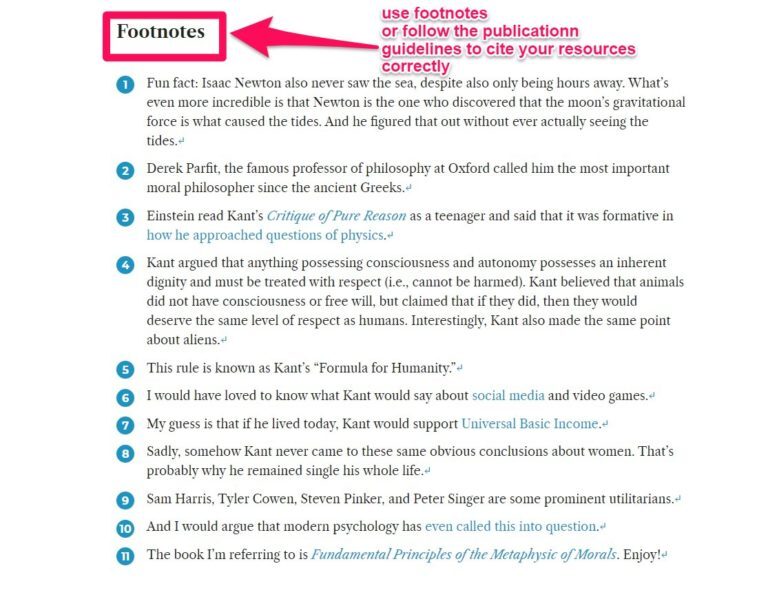
Avoiding plagiarism is a proactive process that involves developing sound research habits and a clear understanding of academic integrity. By implementing effective strategies throughout your writing process, you can ensure that your work is original and properly attributed. This section Artikels practical techniques to help you navigate your research and writing with confidence, preventing accidental or intentional plagiarism.Effective strategies for avoiding plagiarism are built upon a foundation of organized research, careful synthesis, and diligent self-review.
By adopting these best practices, you can produce high-quality academic work that respects intellectual property and upholds ethical standards.
Organized Note-Taking for Research
The way you take notes during your research significantly impacts your ability to avoid plagiarism. A structured approach ensures that you clearly distinguish between your own thoughts and the information you gather from external sources, making the citation process much smoother and reducing the risk of accidental copying.Here are some effective methods for note-taking:
- Use a consistent system: Whether you prefer digital tools like note-taking apps or physical notebooks, maintain a consistent method. This helps in organizing your thoughts and sources.
- Record source information immediately: For every piece of information you jot down, immediately record the full citation details: author, title, publication year, page number, and URL (if applicable). This prevents the dreaded “I’ll look it up later” scenario, which often leads to lost sources.
- Clearly label direct quotes: When you copy text verbatim, use quotation marks and explicitly label it as a direct quote in your notes. This visual cue serves as a constant reminder that this text is not your own and requires precise attribution.
- Summarize in your own words: As you read, actively try to summarize the main points of a source in your own words. This practice not only helps in understanding the material but also naturally creates paraphrased content that you can later integrate into your work.
- Distinguish between ideas and facts: Note whether an idea is an interpretation or argument from a source, or a factual statement. This distinction is crucial when you begin synthesizing information.
- Keep a running bibliography: As you gather sources, maintain a separate document or section for your bibliography. Add sources as you encounter them, rather than waiting until the end of your research.
Distinguishing Common Knowledge from Citable Information
A common pitfall for students is the assumption that all information readily available is “common knowledge” and therefore doesn’t require citation. Understanding this distinction is vital for accurate attribution and avoiding plagiarism.Common knowledge refers to facts that are widely known and accepted within a particular community or by the general public. It’s information that most educated individuals would already be aware of or could easily verify from multiple, readily available sources without needing specific attribution.Consider the following to help differentiate:
- Widespread Acceptance: Is the information something that most people in your field or the general public would know? For example, the fact that Paris is the capital of France is common knowledge.
- Multiple Accessible Sources: Can the information be found in numerous general encyclopedias, textbooks, or reputable online resources without specific attribution to a single author or study? If you have to go to a specialized academic journal to find it, it’s likely not common knowledge.
- Avoidance of Specific Theories or Data: While a scientific principle might be widely known, the specific research, data, or theories that led to its discovery or understanding usually require citation. For instance, the existence of gravity is common knowledge, but Newton’s laws of motion or Einstein’s theory of relativity require citation.
- Context Matters: What might be common knowledge in one academic discipline might be highly specialized in another. Always consider the context of your audience and the subject matter.
Information that is not common knowledge includes:
- Specific theories, findings, or data from academic studies.
- Opinions, arguments, or interpretations presented by an author.
- Statistical data, unless it is universally recognized and easily verifiable.
- Any information that you learned from a specific source and are not certain is widely known.
When in doubt, it is always safer to cite your source.
Techniques for Summarizing and Synthesizing Information
Summarizing and synthesizing are powerful tools for demonstrating your understanding of a topic and integrating diverse perspectives into your own argument. These techniques allow you to present information from sources in your own voice, thereby avoiding direct copying.Summarizing involves condensing the main points of a source into a shorter version, using your own words. Synthesizing goes a step further by combining information and ideas from multiple sources to create a new, coherent understanding or argument.Here are effective techniques:
- Active Reading and Note-Taking: As mentioned earlier, actively read and take notes in your own words. This process naturally leads to summarizing.
- Focus on Main Ideas: When summarizing, identify the core argument or key findings of the source. Ignore minor details unless they are essential to the main point.
- Paraphrase Carefully: When you decide to paraphrase, ensure you are not just rearranging words or substituting synonyms. You must fundamentally rephrase the idea in your own sentence structure and vocabulary. Compare your paraphrase to the original text to ensure it is sufficiently different.
- Attribute All Ideas: Even when paraphrasing or summarizing, you must still attribute the idea to the original source. This is a crucial step in avoiding plagiarism.
- Identify Connections for Synthesis: When synthesizing, look for relationships between different sources. Do they agree? Do they offer contrasting viewpoints? Do they build upon each other’s ideas?
- Develop a Thesis or Argument: Your synthesis should contribute to your own overall argument or thesis. Use the information from your sources to support, explain, or elaborate on your points.
- Structure Your Synthesis: Organize your synthesized information logically. You might group ideas by theme, chronologically, or by comparing and contrasting different perspectives.
- Use Transition Words: Employ transition words and phrases (e.g., “similarly,” “in contrast,” “furthermore,” “however”) to smoothly connect ideas from different sources and guide your reader through your synthesis.
For example, if you are researching the impact of social media on teenagers, you might find one source that highlights its benefits for social connection, another that discusses its negative effects on mental health, and a third that explores its role in identity formation. Synthesizing these would involve presenting a balanced view, perhaps arguing that social media has a complex, multifaceted impact, with both positive and negative consequences depending on usage patterns and individual vulnerabilities.
Pre-Submission Checklist for Originality
Before submitting any written work, a thorough review is essential to ensure that you have met all requirements for academic integrity and originality. This checklist provides a series of actions to confirm that your work is free from plagiarism.Take a moment to go through these steps:
- Review All Notes and Drafts: Reread your research notes and all drafts of your paper. Highlight any sections that are direct quotes or closely resemble source material.
- Verify All Direct Quotations: Ensure that every direct quotation is enclosed in quotation marks and is followed by an in-text citation that accurately reflects the source information in your notes.
- Check All Paraphrased Content: For every instance where you have paraphrased or summarized information, confirm that you have used your own words and sentence structure and that an in-text citation is present.
- Confirm Citations for All Ideas: Double-check that you have cited not only direct quotes and paraphrases but also any specific ideas, theories, data, or statistics that you have taken from external sources, even if they are in your own words.
- Review Your Bibliography/Works Cited Page: Ensure that every source cited in the text is listed in your bibliography or works cited page, and that the formatting is consistent and correct according to the required citation style.
- Verify Unattributed Information: Identify any information in your paper that you have not attributed. Ask yourself if this information is truly common knowledge. If there is any doubt, add a citation.
- Use Plagiarism Detection Software (Optional but Recommended): If available, run your paper through a plagiarism detection tool. This can help identify any unintentional similarities that you may have missed.
- Read Your Paper Aloud: Reading your paper aloud can help you catch awkward phrasing or sections that sound too much like something you might have read elsewhere, prompting you to rephrase.
Paraphrasing and Quoting: When and How to Use Them
Effectively integrating source material into your own writing is a cornerstone of academic integrity. Two primary methods for doing this are paraphrasing and direct quoting. Understanding the nuances of each, and when to employ them, is crucial for producing well-supported and original work.Paraphrasing involves restating someone else’s ideas or information in your own words and sentence structure. The goal is to convey the original meaning accurately without copying the source’s exact phrasing.
Direct quoting, on the other hand, involves using the exact words from a source, enclosed in quotation marks. Both techniques require proper citation to acknowledge the original author.
Distinguishing Between Paraphrasing and Direct Quoting
The fundamental difference lies in the exactness of the wording. Paraphrasing is a reinterpretation, while direct quoting is a verbatim reproduction. While paraphrasing allows for more flexibility in weaving source material into your narrative, direct quotes are best reserved for instances where the original wording is particularly impactful, precise, or historically significant.
Integrating Direct Quotes Effectively
When you choose to use a direct quote, it’s essential to present it clearly and provide context for your reader. This involves more than just dropping quotation marks into your text.Here are the proper procedures for integrating direct quotes:
- Enclose in Quotation Marks: Always surround the exact words from the source with double quotation marks (” “).
- Provide Introductory Context: Introduce the quote with a signal phrase that attributes the quote to the author and explains its relevance to your point. For example, “As Smith argues in her seminal work…” or “The study found that…”
- Ensure Smooth Integration: The quote should flow naturally within your own sentence structure. If the quote is short, you can often integrate it directly into your sentence. For longer quotes, you might set them apart as a blockquote.
- Explain the Quote’s Significance: After presenting the quote, follow up with your own analysis or explanation of how it supports your argument. Don’t assume the reader will understand its importance.
- Cite Accurately: Immediately after the quote, provide the necessary citation information, typically including the author’s last name and the page number(s) where the quote can be found.
Best Practices for Effective Paraphrasing
Successful paraphrasing demonstrates your understanding of the source material while showcasing your ability to articulate ideas in your own voice. It’s not simply about changing a few words.To paraphrase effectively:
- Read and Understand: Thoroughly read the original passage until you fully grasp its meaning.
- Set Aside the Original: Once you understand the material, put the original source away. This prevents you from accidentally copying phrases.
- Write in Your Own Words: Explain the idea using your own vocabulary and sentence structure. Think about how you would explain this concept to someone else.
- Compare and Verify: After writing your paraphrase, compare it to the original to ensure you have accurately captured the meaning without using the same phrasing or sentence order.
- Cite Your Source: Even though you’ve used your own words, you must still cite the original source to give credit to the author’s ideas.
Comparing Poor and Effective Paraphrasing
Consider the following original sentence: “The pervasive influence of social media has fundamentally altered the dynamics of interpersonal communication, leading to both increased connectivity and potential for superficial engagement.” Poor Paraphrase:The constant impact of social networks has changed how people talk to each other, making them more linked but also possibly leading to shallow interaction.This paraphrase merely substitutes a few words (e.g., “pervasive” to “constant,” “altered” to “changed,” “dynamics” to “how”) while retaining much of the original sentence structure and overall phrasing.
It is too close to the original to be considered a true paraphrase. Well-Executed Paraphrase:Social media’s widespread presence has significantly reshaped how individuals interact, fostering greater connection while simultaneously creating opportunities for less meaningful exchanges.This paraphrase captures the original meaning but uses entirely different sentence construction and vocabulary. It demonstrates a genuine understanding and rearticulation of the source’s concept.
Illustrating a Correctly Cited Direct Quote
When the precise wording of a source is important, a direct quote can be powerful. It’s crucial to introduce it properly and cite it accurately.
“The digital revolution has not merely introduced new tools; it has fundamentally reconfigured the human experience of connection and information consumption.” (Johnson, 2021, p. 45)
This blockquote presents a direct quote, clearly indicating the exact words used and immediately following with the necessary citation, allowing the reader to locate the original source.
Tools and Resources for Citation Management
Navigating the world of academic and professional writing often involves a significant amount of research, and keeping track of all your sources can quickly become a complex task. Fortunately, a variety of tools and resources are available to streamline the process of generating citations and bibliographies, ensuring accuracy and saving valuable time. These tools are designed to help you manage your references effectively, from initial discovery to final submission.The effective management of research materials and the accurate generation of citations are crucial for maintaining academic integrity and producing credible work.
Investing a little time in learning to use these tools can significantly enhance the efficiency and quality of your writing process.
Citation Management Software and Online Tools
Numerous software applications and online platforms are designed to assist writers in generating citations and bibliographies. These tools automate much of the tedious work involved in formatting references according to specific style guides, allowing you to focus more on your content.Some of the most popular and widely used tools include:
- Zotero: A free, open-source reference management software that allows you to collect, organize, cite, and share research sources. It integrates with web browsers and word processors.
- Mendeley: Another free reference manager that helps you organize your research papers, PDFs, and notes. It also offers social networking features for researchers.
- EndNote: A powerful, commercial reference management software widely used in academic institutions. It offers extensive features for organizing, searching, and citing references.
- RefWorks: A web-based citation management service that allows users to create bibliographies, collect research, and manage citations in a collaborative environment.
- BibTeX: Primarily used with LaTeX, BibTeX is a reference management software that stores bibliographic data in a plain text file, making it highly portable and customizable.
These tools typically allow you to import references directly from databases, websites, or PDFs, and then automatically format them into bibliographies based on your chosen citation style.
Benefits of Reference Management Software
Utilizing reference management software offers a multitude of advantages for anyone engaged in research and writing. These benefits extend beyond simple citation generation to encompass better organization, enhanced collaboration, and improved accuracy.The advantages of incorporating these tools into your workflow include:
- Centralized Organization: All your research materials, including articles, books, websites, and notes, can be stored and organized in a single, searchable database. This eliminates the need for scattered files and notes.
- Automated Citation Generation: With a few clicks, these tools can generate in-text citations and bibliographies in virtually any citation style (e.g., APA, MLA, Chicago, IEEE), saving considerable time and reducing the risk of formatting errors.
- Consistency in Formatting: Ensures that all your citations and bibliographies adhere strictly to the required style guide, promoting a professional and polished presentation of your work.
- Facilitated Collaboration: Many tools allow you to share reference libraries with colleagues or study groups, making collaborative research projects more efficient.
- Error Reduction: By automating the citation process, these tools significantly minimize the chances of human error, such as typos, incorrect punctuation, or missing information.
- Efficient Retrieval: Quickly find specific sources or information within your research library using powerful search and filtering capabilities.
Verifying Automatically Generated Citations
While citation management tools are highly effective, they are not infallible. It is crucial to remember that these tools generate citations based on the information you provide or import. Therefore, a final check for accuracy is always recommended.To ensure the reliability of your citations, consider the following tips:
- Cross-Reference with Original Source: Always compare the automatically generated citation with the original source document (book, article, website). Verify that all details, such as author names, publication dates, titles, page numbers, and URLs, are correct and complete.
- Check for Completeness: Ensure that all required elements for the specific citation style are present. For example, some styles require a DOI (Digital Object Identifier) for journal articles, while others do not.
- Review Style Guide Requirements: Familiarize yourself with the specific requirements of the citation style you are using. Different styles have unique rules for punctuation, capitalization, and the order of elements.
- Manual Adjustments: Be prepared to make manual adjustments. Sometimes, especially with less common source types or complex publications, the software may not interpret the information perfectly.
- Utilize the Software’s Editing Features: Most reference managers allow you to edit individual citation entries. Use these features to correct any discrepancies found during your verification process.
The responsibility for accurate citation ultimately rests with the author, even when using automated tools.
Official Style Guides for In-Depth Citation Rules
For comprehensive and definitive guidance on citation rules, consulting the official style guides is indispensable. These guides provide detailed instructions, examples, and explanations for every aspect of citation and bibliographic formatting.Official style guides can typically be found through the following avenues:
- Publisher Websites: Major academic publishers often provide style guides for the journals or books they produce. These are usually available in a dedicated “author guidelines” or “submission requirements” section of their websites.
- Professional Organizations: Academic and professional organizations relevant to your field of study usually publish and maintain their own style guides. For instance, the American Psychological Association (APA) publishes the “Publication Manual of the American Psychological Association,” and the Modern Language Association (MLA) publishes the “MLA Handbook.”
- University Libraries and Writing Centers: University libraries and writing centers are excellent resources. They often provide access to official style guides and offer workshops or online tutorials on citation practices. Many also maintain their own comprehensive online guides that summarize key rules.
- Dedicated Publishers of Style Guides: Some style guides are published by specific entities dedicated to academic publishing standards. For example, the Chicago Manual of Style is published by the University of Chicago Press.
“Accuracy in citation is not merely a matter of following rules; it is a fundamental aspect of scholarly integrity and intellectual honesty.”
Ending Remarks
By diligently applying the strategies and knowledge presented in this guide, you can confidently produce original work and uphold the highest standards of academic and professional integrity. Mastering the avoidance of plagiarism and the correct citation of sources not only safeguards your reputation but also enriches your own understanding and contribution to the broader intellectual community. Embrace these practices as fundamental pillars of your scholarly journey, ensuring your work is both impactful and ethically sound.