Embarking on the academic journey can present unforeseen challenges, and sometimes, despite our best efforts, a course may not align with our success. This guide, “How to Drop a Class You’re Failing,” is designed to illuminate the path through such a situation, offering clarity and actionable steps for navigating this decision with confidence and foresight. We understand that realizing a class isn’t going as planned can be disheartening, and this resource is here to empower you with the knowledge to make informed choices about your academic future.
We will delve into the critical aspects of understanding the decision to withdraw, the official processes involved, and the academic and financial implications you might encounter. Furthermore, we will explore proactive alternatives to dropping, effective strategies for future academic success, and the nuances of different withdrawal statuses. Our aim is to provide a comprehensive overview, ensuring you have all the necessary information to approach your professors, advisors, and support services with clarity and purpose.
Understanding the Decision to Drop a Failing Class
Recognizing that a course is not progressing as hoped can be a challenging realization for any student. It’s a situation that often involves a complex interplay of academic performance, personal well-being, and future aspirations. This section aims to explore the common reasons behind this decision, the emotional landscape it can evoke, and the initial steps toward making an informed choice.The decision to withdraw from a failing class is rarely made lightly.
It typically stems from a combination of factors that signal a significant disconnect between the student’s efforts and their academic outcomes. Understanding these underlying causes is crucial for a student to move forward constructively.
Common Reasons for Considering Withdrawal
Students often find themselves contemplating dropping a course when it becomes evident that the academic challenges are insurmountable within the current framework. This can manifest in various ways, impacting a student’s ability to grasp the material, complete assignments effectively, or perform adequately on assessments.
- Consistent Poor Performance: Repeatedly failing to achieve satisfactory grades on assignments, quizzes, and exams, despite dedicated effort.
- Lack of Engagement and Understanding: An inability to connect with the course material, leading to a fundamental lack of comprehension that hinders progress.
- Overwhelming Course Load: The course may be disproportionately demanding, consuming an excessive amount of time and energy that detracts from other academic responsibilities.
- Misalignment with Academic Goals: Discovering that the course content or structure does not align with a student’s long-term academic or career objectives, making continued effort feel unproductive.
- Personal Circumstances: Unforeseen personal issues, such as health problems, family emergencies, or significant life changes, can create obstacles that make successful completion of the course improbable.
Emotional and Psychological Impact
The realization that a class is not going well can trigger a range of emotional and psychological responses. It’s important to acknowledge these feelings as a natural part of the process and to address them constructively.
The feeling of falling behind can be disheartening, but it is also an opportunity for redirection and self-discovery.
Students might experience feelings of disappointment, frustration, or even shame. There can be a sense of failure, especially if they had high expectations for themselves. Anxiety about academic standing and future implications can also surface. It’s crucial to remember that these feelings are valid, and seeking support, whether from peers, academic advisors, or mental health professionals, can be beneficial in navigating these emotions.
Initial Steps in Contemplating Withdrawal
When a student begins to seriously consider dropping a class, a structured approach can help clarify the situation and guide their decision-making process. These initial steps are designed to gather information and assess the viability of continuing.
- Review Academic Performance: Carefully examine current grades, assignment feedback, and any potential for improvement. This involves looking at the syllabus and understanding the grading structure.
- Consult with the Instructor: Schedule a meeting with the professor or teaching assistant to discuss academic performance, understand their perspective on the student’s progress, and explore any available options for improvement.
- Seek Academic Advising: Connect with an academic advisor to discuss the implications of dropping the class, understand university policies, and explore alternative course selections or academic strategies.
- Evaluate Time Commitment: Honestly assess the current and projected time required to succeed in the course and compare it with the demands of other academic and personal commitments.
Self-Assessment for Decision Making
The ultimate decision to drop a class hinges on a thorough and honest self-assessment. This involves looking beyond immediate academic struggles to consider the broader impact on a student’s academic journey and overall well-being.A critical aspect of this self-assessment is understanding one’s own learning style and limitations. For instance, if a student consistently struggles with a particular teaching method or the pace of the course, and there are no viable adjustments, it might indicate that continuing would be an inefficient use of resources.
Furthermore, evaluating the potential impact on academic progress, such as credit requirements for graduation or the need for prerequisite courses, is paramount.It is also important to consider the psychological toll of continuing in a class that is causing significant stress and demotivation. Sometimes, the mental energy saved by withdrawing can be redirected towards courses where success is more attainable, leading to a more positive and productive academic experience overall.
Identifying the Official Withdrawal Process

Successfully navigating the process of officially dropping a class is crucial to ensure that the withdrawal is formally recognized by your institution and reflected accurately on your academic record. This involves understanding the specific procedures, timelines, and personnel involved at your particular school. Failing to follow the correct steps can lead to unintended consequences, such as the class remaining on your transcript with a failing grade.This section provides a comprehensive guide to help you identify and execute the official withdrawal process at most educational institutions.
By understanding these steps, you can ensure a smooth and accurate removal of the course from your academic enrollment.
Official Withdrawal Procedure Steps
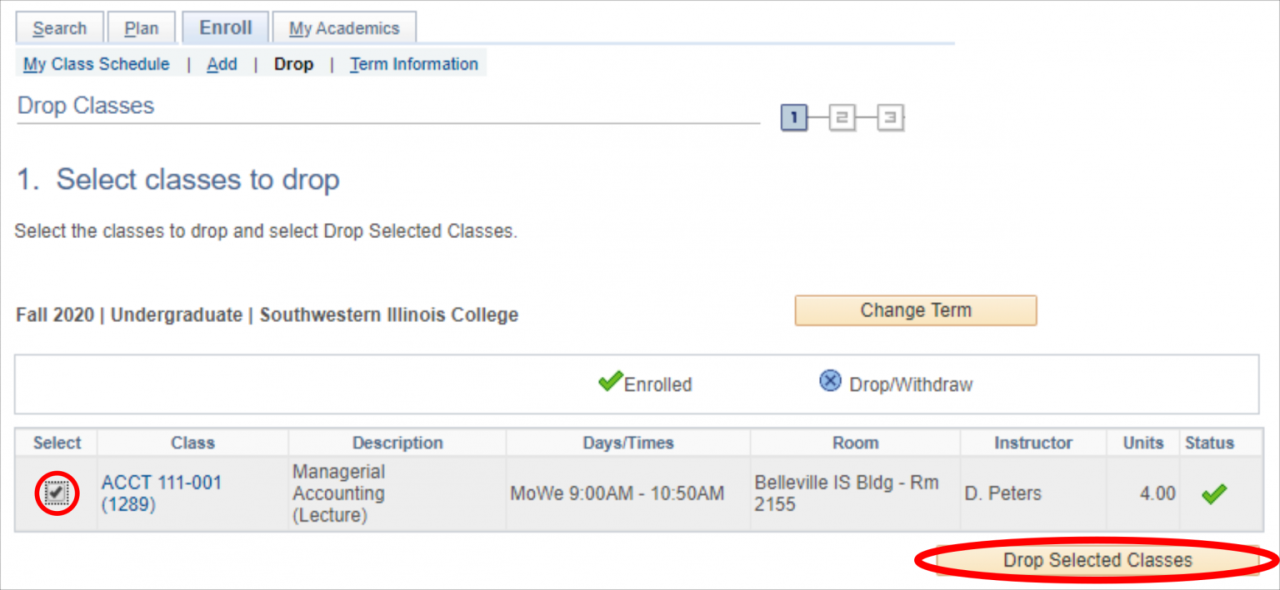
Most educational institutions have a standardized procedure for officially withdrawing from a course. Following these steps diligently is essential for a successful outcome.
- Consult Your Institution’s Academic Calendar and Policies: The first and most critical step is to thoroughly review your institution’s official academic calendar and student handbook. These documents Artikel specific withdrawal policies, deadlines, and required forms. Information is typically available on the registrar’s office or academic affairs website.
- Obtain the Official Withdrawal Form: Locate and download the official course withdrawal form. This is often found on the registrar’s office website or can be obtained in person from their office.
- Complete the Withdrawal Form Accurately: Fill out the form completely and accurately. This usually includes your student identification number, the course name and number, the semester or term, and your signature. Some forms may require a brief explanation for the withdrawal, though this is not always the case.
- Seek Necessary Approvals: Depending on your institution and the timing of the withdrawal, you may need signatures from your academic advisor, the instructor of the course, or a department head. The withdrawal form itself will usually specify who needs to approve the request.
- Submit the Completed Form: Return the signed and completed withdrawal form to the designated office, which is typically the registrar’s office or a specific student services department. Ensure you submit it before the official deadline.
- Confirm Withdrawal: After submission, follow up with the registrar’s office to confirm that your withdrawal has been processed and that the course has been removed from your academic record. You may receive a confirmation email or a revised transcript.
Withdrawal Deadlines and Timelines
Understanding the deadlines associated with course withdrawals is paramount. These timelines are set by each institution and can vary significantly.The typical deadlines are structured to allow students time to assess their academic standing while also enabling the institution to manage enrollment and grading effectively.
- Add/Drop Period: This is the initial period at the beginning of a term when students can make changes to their schedule without academic penalty. Withdrawal during this time usually results in the course being removed from the record with no notation.
- Withdrawal Without Academic Penalty (W Grade): Most institutions have a specific date, often several weeks into the semester, after which a student can withdraw and receive a “W” (Withdrawal) grade on their transcript. This grade does not affect the GPA.
- Late Withdrawal: In exceptional circumstances, such as a documented medical emergency or significant personal hardship, students may be permitted to withdraw after the standard deadline. This often requires a formal petition and supporting documentation, and may be subject to approval by a dean or a special committee. The outcome of a late withdrawal can vary, sometimes resulting in a “W” or, in rare cases, a failing grade if the petition is denied.
- Final Grade Submission: Once the final grade submission deadline passes, it is generally not possible to withdraw from a course. Any remaining enrolled courses will receive a final grade based on the student’s performance.
It is imperative to check your institution’s specific academic calendar for these exact dates, as they are strictly enforced.
Key Personnel and Departments for Withdrawal
Successfully completing a course withdrawal often involves interacting with specific individuals and departments within your educational institution. Knowing who to contact can streamline the process and ensure you receive the correct guidance.The following are the primary points of contact for most withdrawal procedures:
- Registrar’s Office: This is the central hub for all academic record management. They handle the official processing of withdrawal forms, maintain student records, and can provide information on deadlines and policies.
- Academic Advisor: Your academic advisor is a crucial resource. They can offer guidance on the academic implications of withdrawing, discuss alternative solutions, and often need to sign off on withdrawal forms.
- Course Instructor: While not always mandatory for the withdrawal process itself, it is highly recommended to speak with your instructor. They can provide insight into your current standing in the course, discuss potential for improvement, and sometimes offer advice on whether withdrawal is the best course of action.
- Department Chair/Head: In some cases, particularly for advanced or specialized courses, the department chair’s approval might be required.
- Student Services or Dean of Students Office: For issues related to extenuating circumstances or if you encounter difficulties with the standard withdrawal process, the Dean of Students office can offer support and guidance.
Essential Documents and Information for Withdrawal
To ensure a smooth and successful withdrawal process, it is important to have all necessary documentation and information readily available. This preparation can prevent delays and complications.The following checklist Artikels the typical requirements for officially dropping a class:
- Student Identification Number: This unique number is essential for the institution to locate your academic record.
- Course Information: You will need the full course name, course number (e.g., MATH 101), and the specific semester or term in which you are enrolled.
- Completed Withdrawal Form: The official form provided by your institution, filled out accurately and completely.
- Required Signatures: Ensure you have obtained all necessary approvals from advisors, instructors, or department heads as indicated on the withdrawal form.
- Supporting Documentation (if applicable): For late withdrawals or those due to extenuating circumstances, be prepared to provide documentation such as a doctor’s note, a letter of support, or other official records.
- Photo Identification: You may be asked to present a valid photo ID when submitting forms in person.
Having these items organized before you begin the withdrawal process will significantly expedite your efforts.
Navigating Academic and Financial Implications
Understanding the ramifications of dropping a class is crucial for making an informed decision. This section delves into the potential academic and financial consequences you might encounter, providing clarity on how a withdrawal can influence your academic standing and your financial investment in your education. It’s important to weigh these implications carefully against the potential outcomes of failing the course.
When you decide to drop a class, especially one you are failing, it triggers a series of academic and financial considerations. These can range from the immediate impact on your Grade Point Average (GPA) to longer-term effects on your academic progress and the financial cost of your education.
Impact on Grade Point Average (GPA)
Dropping a class before the official withdrawal deadline typically results in a “W” (Withdrawal) grade appearing on your transcript instead of a letter grade. This “W” grade does not affect your GPA. However, if you withdraw after the deadline or fail to complete the withdrawal process correctly, you may receive a failing grade (e.g., an “F”), which will significantly lower your GPA.
For instance, a grade of “F” can reduce your GPA by a full point or more, depending on the credit hours of the course and your existing GPA. This can have a cascading effect on future academic opportunities, such as scholarships, internships, and graduate school admissions.
Academic Standing and Probation Status
Institutions often have academic standing policies that students must meet to remain in good standing. Dropping a class itself generally does not negatively impact your academic standing if done within the allowed timeframe. However, if a pattern of dropping classes or failing courses emerges, it could lead to academic probation. Academic probation is a formal warning that your academic performance is unsatisfactory.
If you remain on probation and your performance does not improve, you could face suspension or even expulsion from the university. It’s essential to check your university’s specific academic standing policies, as requirements can vary significantly.
Financial Repercussions and Tuition Refunds
The financial implications of dropping a class are directly tied to the university’s refund policy and the timing of your withdrawal. Many universities offer a full or partial tuition refund if you drop a class within the first few weeks of the semester. After this period, refunds typically decrease or disappear entirely. If you drop a class after the refund period, you will likely not receive any money back for that course.
Furthermore, you will still need to retake the course to earn the required credits for your degree. This means you will have to pay tuition and fees for the course a second time, increasing the overall cost of your education. For example, if a three-credit course costs $1,000 in tuition and fees, and you drop it after the refund period, you will have spent $1,000 without earning credit, and will need to spend another $1,000 to take it again.
Long-Term Academic Consequences: Dropping vs. Failing
Comparing the long-term academic consequences of dropping a failing class versus actually failing it reveals distinct differences. While dropping a class results in a “W” on your transcript and no impact on your GPA, failing a course results in a letter grade (typically an “F”) that is factored into your GPA. A failing grade can significantly lower your GPA, potentially jeopardizing scholarships, financial aid, and future academic opportunities.
It also means you have to retake the course, potentially delaying your graduation. In contrast, a “W” simply indicates you withdrew and does not carry the same negative academic penalty. However, it is important to note that an excessive number of “W” grades on a transcript could also raise concerns for some admissions committees or employers, suggesting a pattern of non-completion.
Therefore, while dropping is generally preferable to failing, it should still be a decision made thoughtfully and strategically.
Exploring Alternatives to Dropping a Class
Before making the decision to formally withdraw from a course, it is often beneficial to explore all available avenues for improving your performance. Sometimes, a struggling student can turn the situation around with the right support and a proactive approach. This section Artikels strategies and resources that can help you attempt to salvage your grade and stay on track academically.Understanding that you are facing difficulties in a course is the first step towards finding a solution.
Many students encounter academic challenges at some point during their studies. Fortunately, a range of support systems and flexible options are typically available to help you overcome these hurdles.
Strategies for Improving Performance
Actively engaging with the course material and seeking help are crucial for improving your standing. Small, consistent efforts can lead to significant improvements over time.Several practical strategies can be implemented to boost your performance in a challenging course:
- Consistent Study Habits: Dedicate specific, regular times for studying course material. Avoid cramming and aim for spaced repetition of information.
- Active Learning Techniques: Engage with the material by summarizing lectures, creating flashcards, teaching concepts to a study partner, or working through practice problems.
- Reviewing Feedback: Carefully analyze feedback provided on assignments and exams. Identify recurring errors and focus on understanding the underlying concepts.
- Time Management: Prioritize tasks and allocate sufficient time for coursework. Break down large assignments into smaller, manageable steps.
Seeking Academic Support
Academic institutions offer various resources designed to assist students who are struggling. Utilizing these services can provide personalized guidance and effective learning strategies.Reaching out for academic support is a sign of strength and a proactive step towards success. Professors and academic support centers are valuable allies in your educational journey.The following are key avenues for seeking academic support:
- Professor Office Hours: Regularly attend your professor’s office hours. This is an excellent opportunity to ask specific questions, clarify doubts, and demonstrate your commitment to the course. Professors can offer insights into their expectations and provide targeted advice.
- Teaching Assistants (TAs): If available, TAs often hold their own office hours or review sessions. They can provide additional explanations and support, especially for smaller groups or specific topics.
- Tutoring Services: Most universities and colleges offer free or low-cost tutoring services. Professional tutors or peer tutors can offer one-on-one assistance, help you understand difficult concepts, and improve your study skills.
- Study Groups: Collaborating with classmates can be highly beneficial. Form or join a study group to discuss course material, review notes, and quiz each other. Ensure the group remains focused and productive.
- Academic Advising: Your academic advisor can provide guidance on course selection, academic policies, and connect you with relevant campus resources.
Negotiating Incomplete Grades or Alternative Assignments
In certain circumstances, it may be possible to negotiate an arrangement with your professor that allows you to complete the course requirements at a later date or through alternative means. This is typically considered when a student has made a good-faith effort but faces extenuating circumstances.Exploring options for an incomplete grade or alternative assignments requires open communication with your instructor.
These arrangements are usually granted at the professor’s discretion and depend on the student’s overall performance and the nature of the extenuating circumstances.Key considerations for negotiating these arrangements include:
- Demonstrate Effort: Show your professor the steps you have already taken to improve your performance and your commitment to completing the course.
- Communicate Circumstances: Clearly and honestly explain any extenuating circumstances that are affecting your ability to succeed in the course. This could include personal emergencies, health issues, or significant unexpected events.
- Propose a Plan: If seeking an incomplete, propose a realistic timeline and a clear plan for completing the remaining coursework. If requesting alternative assignments, suggest specific tasks that would demonstrate your understanding of the course material.
- Understand the Agreement: Ensure you fully understand the terms of any agreement, including deadlines, grading criteria, and the consequences of not meeting the agreed-upon conditions.
Resources for Students Facing Academic Difficulties
Institutions provide a wealth of resources to support students experiencing academic challenges. Familiarizing yourself with these resources can empower you to seek the assistance you need effectively.Navigating academic difficulties can be less daunting when you are aware of the support systems available. These resources are designed to offer comprehensive assistance, from academic skill-building to personal well-being.A list of common resources available to students includes:
- Academic Success Centers: These centers often provide workshops on study skills, time management, test-taking strategies, and writing support.
- Counseling Services: If academic struggles are linked to stress, anxiety, or other personal issues, campus counseling services can offer professional support and coping strategies.
- Disability Services: Students with documented disabilities may be eligible for accommodations that can help them succeed in their courses.
- Library Resources: University libraries offer extensive research databases, study spaces, and librarians who can assist with research and information literacy.
- Online Learning Platforms: Many institutions provide access to online learning modules, practice quizzes, and supplementary course materials that can reinforce learning.
Planning for Future Academic Success After Dropping
Dropping a class, especially one you are failing, is a significant decision that can impact your academic trajectory. However, it also presents a valuable opportunity to reassess your approach and implement strategies that will foster greater success in your future academic endeavors. This section focuses on proactively planning for a more successful academic journey moving forward, ensuring that this experience serves as a stepping stone rather than a setback.The key to moving forward effectively lies in a structured and thoughtful approach to your future coursework.
By learning from the circumstances that led to your decision to drop, you can build a more robust academic foundation. This involves not only addressing the immediate need to retake the course but also making broader adjustments to your academic planning and personal study habits.
Retaking the Dropped Course
Successfully retaking a course requires a strategic approach that addresses the root causes of your initial difficulties. It is essential to approach this second attempt with a renewed focus and a clear understanding of what needs to be done differently.To effectively plan for retaking the course, consider the following steps:
- Analyze Past Performance: Review your previous performance in the course. Identify specific topics, assignments, or exams where you struggled the most. Understanding these weak areas is crucial for targeted improvement.
- Consult with the Instructor: Before the semester begins, consider reaching out to the instructor or a teaching assistant for the course. Discuss your previous challenges and ask for advice on how to succeed this time around. They may offer valuable insights or resources.
- Utilize University Resources: Explore academic support services offered by your university, such as tutoring centers, writing labs, or subject-specific study groups. These resources can provide additional academic assistance.
- Adjust Study Schedule: Dedicate specific, consistent blocks of time for studying the material of the retaken course. Early and consistent engagement is often more effective than cramming.
Adjusting Future Course Loads
Preventing similar situations in the future involves a careful evaluation of your overall academic workload and personal capacity. Overcommitting can lead to a dilution of effort and increased stress, making academic success more challenging.To effectively adjust future course loads and avoid academic overload, consider these strategies:
- Realistic Assessment of Time Commitment: Before registering for courses, thoroughly research the typical time commitment required for each. Factor in lectures, readings, assignments, and study time.
- Balance Course Difficulty: When selecting courses for a semester, aim for a balanced mix of challenging and more manageable subjects. Avoid scheduling too many demanding courses concurrently.
- Prioritize Core Requirements: Ensure you are prioritizing courses that are essential for your degree progression. Sometimes, spreading out required courses over more semesters can be beneficial.
- Seek Advisor Guidance: Regularly consult with your academic advisor to discuss your course plan. They can offer expert advice on course sequencing, workload management, and degree requirements.
Building Better Study Habits and Time Management Skills
The ability to manage your time effectively and employ sound study habits is fundamental to academic success. These are skills that can be learned and refined with practice and conscious effort.To cultivate more effective study habits and time management skills, implement the following:
- Create a Detailed Schedule: Develop a weekly schedule that allocates specific times for classes, studying, assignments, extracurricular activities, and personal time. Be realistic about how much time each activity requires.
- Break Down Large Tasks: Divide large assignments or study sessions into smaller, more manageable chunks. This makes tasks seem less daunting and promotes consistent progress.
- Minimize Distractions: Identify your common distractions (e.g., social media, phone notifications) and take steps to minimize them during study periods. Consider using website blockers or finding a quiet study environment.
- Active Learning Techniques: Engage in active learning strategies such as summarizing material in your own words, teaching concepts to others, or creating flashcards, rather than passively rereading notes.
- Regular Review and Reflection: Dedicate time each week to review what you have learned and reflect on your study methods. Identify what is working well and what could be improved.
Communicating Your Decision to Academic Advisors or Mentors
Open and honest communication with your academic advisors or mentors is vital for navigating academic challenges and planning for the future. They are valuable resources who can provide support, guidance, and alternative perspectives.When communicating your decision to drop a class to your academic advisors or mentors, consider the following:
- Be Prepared to Explain: Clearly articulate the reasons for your decision, focusing on the academic challenges you faced and your proactive steps to address them.
- Express Your Commitment to Success: Reiterate your dedication to your academic goals and express your desire to learn from this experience.
- Seek Their Advice for the Future: Ask for their guidance on how to best retake the course, adjust your academic plan, and improve your study strategies.
- Discuss Potential Impacts: Be open to discussing how this decision might affect your graduation timeline or other academic requirements, and work with them to find solutions.
Your advisor can help you understand the implications of dropping a course on your overall academic progress and assist in developing a revised plan that aligns with your degree requirements and personal goals.
Understanding Different Withdrawal Statuses

Navigating the academic landscape often involves making difficult decisions, and understanding the various outcomes of those decisions is crucial. When a student chooses to drop a course, the official record on their transcript will reflect a specific status. This status carries weight and can impact future academic and professional opportunities. It is therefore important to differentiate between the common withdrawal statuses and their implications.The distinction between a “W” (Withdrawal) and an “F” (Fail) on a transcript is significant and impacts how academic institutions and future employers perceive a student’s academic record.
While both indicate a course was not successfully completed, the underlying reasons and the perception of these grades differ considerably. Understanding these differences will help you make informed decisions about your academic path.
Withdrawal (“W”) vs. Failing Grade (“F”)
A “W” on a transcript signifies that a student officially withdrew from a course before the designated withdrawal deadline, typically without academic penalty in terms of GPA. This action indicates that the student recognized they were struggling and made a proactive decision to disengage from the course, rather than continuing and receiving a failing grade. Conversely, an “F” is assigned when a student completes the course but does not achieve a passing grade.
This reflects a lack of mastery of the course material.The implications of each status for future academic applications, such as applying to graduate school or transferring to another institution, are varied. Admissions committees often view a “W” more favorably than an “F.” A “W” suggests a responsible decision-making process and an awareness of academic limitations, whereas an “F” directly indicates academic deficiency in a particular subject.
Perception by Admissions Committees
Admissions committees evaluate transcripts holistically. While a single “W” might be seen as a minor blip, especially if explained, multiple “W”s could raise questions about a student’s commitment or ability to manage their course load. An “F,” however, is a direct reflection of academic underperformance. For graduate programs, which are often highly competitive, an “F” can be a significant red flag, suggesting a potential lack of preparedness for advanced study.A withdrawal is generally perceived as a strategic move to preserve a student’s GPA and academic standing.
It demonstrates an understanding of when to cut losses. A failing grade, on the other hand, directly impacts the GPA and can be interpreted as a failure to meet academic standards.
Scenarios Favoring Withdrawal Over a Failing Grade
There are specific circumstances where opting for a withdrawal is a more advantageous choice than allowing a failing grade to be recorded. These scenarios typically arise when a student recognizes the inevitability of failure and wishes to mitigate the long-term negative consequences.Consider the following situations where a withdrawal might be preferable:
- Early Recognition of Difficulty: If, early in the semester, it becomes clear that the course material is not being grasped and the likelihood of passing is extremely low, withdrawing can prevent an “F” from appearing on the transcript.
- Significant Personal Circumstances: Unforeseen personal emergencies, health issues, or family crises can severely impact a student’s ability to perform in a course. In such cases, a withdrawal, often accompanied by documentation, can be explained more favorably than a failing grade.
- Impact on GPA: A failing grade can significantly lower a student’s GPA, potentially affecting eligibility for scholarships, honors programs, or future academic opportunities. A withdrawal, when processed correctly, does not impact the GPA.
- Course Load Management: Sometimes, a student may realize they have overestimated their capacity to handle a demanding course load. Withdrawing from one course can free up time and mental energy to succeed in the remaining courses.
The key advantage of a withdrawal is that it allows a student to remove the course from their academic record without the negative GPA impact of a failing grade. This can be particularly important when applying for competitive graduate programs or scholarships that scrutinize academic performance closely. While a withdrawal does appear on the transcript, it is often viewed as a sign of maturity and responsible academic decision-making, especially when the circumstances are explained appropriately in an application or personal statement.
Communicating with Professors and Advisors
Open and honest communication with your professors and academic advisors is a cornerstone of successfully navigating academic challenges, including the decision to drop a class. These individuals are valuable resources who can offer support, clarity, and guidance. Approaching them proactively and transparently ensures you receive the most effective assistance tailored to your specific situation.
Sample Dialogues for Speaking with Professors About Academic Struggles
When discussing academic difficulties with a professor, it is important to be prepared, respectful, and clear about your concerns. The goal is to demonstrate your commitment to understanding the material and to seek constructive feedback.
- Student: “Good morning, Professor [Professor’s Last Name]. Thank you for meeting with me. I’m struggling with the recent concepts in [Course Name], specifically [mention specific topic or assignment]. I’ve been attending lectures and reviewing the material, but I’m finding it challenging to grasp [explain the difficulty].”
- Professor: “Thank you for coming to me, [Student’s Name]. I appreciate you bringing this to my attention. Can you tell me more about what you’ve tried so far to understand it?”
- Student: “I’ve reread the textbook chapters on [topic], and I’ve tried working through the practice problems. However, when I attempt the homework, I find myself getting stuck on [specific type of problem or concept]. I’m concerned about my performance on the upcoming [quiz/exam].”
- Professor: “I understand. Let’s look at this problem together. [Professor might work through a problem or suggest a different approach]. I also recommend [suggest additional resources, such as tutoring services, supplementary readings, or study groups]. If you continue to struggle, please schedule another meeting with me before the next assignment is due.”
Approaching an Academic Advisor for Guidance on Dropping a Class
Academic advisors are specifically trained to help students make informed decisions about their academic path. They can provide context regarding university policies, potential consequences, and alternative solutions.
- Student: “Hello, [Advisor’s Name]. I’d like to discuss my academic progress. I’m currently enrolled in [Course Name], and I’m finding that I’m significantly behind and my performance is not meeting expectations. I’m considering the possibility of dropping the class.”
- Advisor: “Thank you for coming in, [Student’s Name]. I’m here to help you explore your options. Before we discuss dropping, can you tell me more about what’s contributing to your difficulties in [Course Name]?”
- Student: “I’ve been struggling with [mention reasons, e.g., workload from other courses, personal issues, difficulty with the subject matter]. I’ve tried [mention efforts made], but I’m concerned about the impact this class is having on my overall GPA and my ability to succeed in other courses.”
- Advisor: “I understand your concerns. Dropping a class is a significant decision with academic and financial implications. Let’s review your academic record and discuss the official withdrawal process, including deadlines and how it might affect your financial aid or scholarship. We can also explore if there are any academic support services that might help you improve your standing in the course, or if there are alternative courses you could take next semester to catch up on credits.”
The Importance of Proactive and Transparent Communication
Being proactive means initiating these conversations early, rather than waiting until a deadline has passed or the situation has become unmanageable. Transparency involves being honest about your challenges and your efforts to overcome them. This approach builds trust and allows your professors and advisors to offer the most relevant and timely support.
“Early and honest communication is key to turning academic challenges into learning opportunities.”
The Role of Advisors in Informed Decision-Making
Academic advisors play a crucial role in guiding students through complex academic choices. They are knowledgeable about university policies, curriculum requirements, and the potential long-term effects of academic decisions.
- Advisors can clarify university policies regarding dropping classes, including withdrawal deadlines and the process for official withdrawal.
- They can help students understand the academic implications, such as the impact on credit hours, degree progress, and future course prerequisites.
- Advisors can discuss the financial implications, including potential impacts on tuition, fees, and financial aid or scholarships.
- They can identify and recommend available academic support services, such as tutoring, writing centers, or counseling, that might help a student succeed in the course.
- Advisors can assist students in exploring alternative academic pathways, such as retaking the course, taking a different course to fulfill requirements, or adjusting their overall academic plan.
- They provide a neutral and objective perspective, helping students weigh the pros and cons of dropping a class against other potential solutions.
Considerations for Specific Course Types
While the general process of dropping a class is similar across different academic disciplines, certain course types present unique challenges and require specific considerations. Understanding these nuances can help students make more informed decisions and mitigate potential negative impacts on their academic trajectory.The nature of a course, whether it’s a foundational requirement, a building block for future studies, or a specialized elective, significantly influences the implications of a withdrawal.
This section will delve into these specific scenarios to provide a comprehensive understanding.
Core Curriculum Classes
Dropping a core curriculum class, often referred to as a general education requirement or a foundational course, can have ripple effects on a student’s academic plan. These courses are typically designed to provide a broad base of knowledge essential for a particular degree program.When considering dropping a core class, it is crucial to assess its role within the overall degree requirements.
Many universities have a set sequence for these courses, and failing to complete one might necessitate delaying other required courses that depend on it. This can extend the time to graduation. Additionally, some core courses may have specific prerequisites themselves, meaning a failed attempt could prevent enrollment in subsequent courses that build upon that foundation. Students should consult their academic advisor to understand how a withdrawal from a core class impacts their graduation timeline and course sequencing.
Prerequisite Courses
The impact of dropping a prerequisite course on future academic progression is significant and demands careful planning. Prerequisite courses are those that must be successfully completed before a student can enroll in a more advanced course.Failing to complete a prerequisite course, whether through a failing grade or a withdrawal, directly impedes a student’s ability to advance in their chosen field of study.
For instance, a student wishing to take Organic Chemistry II must first pass Organic Chemistry I. If they withdraw from Organic Chemistry I, they will not be eligible to register for Organic Chemistry II in the following semester, potentially creating a one-semester delay in their academic sequence. This delay can have a cascading effect on other courses and internships, particularly in competitive programs.
It is imperative to retake the prerequisite course as soon as possible to get back on track.
Laboratory or Practical-Based Courses Versus Lecture-Based Courses
The withdrawal process and its implications can differ between courses heavily reliant on hands-on work and those primarily delivered through lectures. Laboratory and practical-based courses often involve specific scheduling, resource allocation, and group work that can complicate withdrawals.In laboratory or practical-based courses, such as biology labs, chemistry labs, or studio art classes, a withdrawal might mean losing access to specialized equipment or materials.
The instructor may also have allocated specific lab stations or project resources that are difficult to reassign. Consequently, re-enrollment might depend on the availability of these resources in a future term. Lecture-based courses, while still requiring successful completion, generally offer more flexibility in terms of re-enrollment, as the primary resource is the instructor and the lecture content, which is more easily replicated.
Specialized or Upper-Level Electives
Dropping specialized or upper-level electives, while potentially less impactful on core degree requirements, can still have notable implications for a student’s academic profile and future opportunities. These courses often delve into niche areas of study and may be offered less frequently.When considering dropping a specialized elective, students should evaluate its contribution to their overall academic interests or potential career paths.
For example, an upper-level elective in Artificial Intelligence might be crucial for a computer science student aiming for a career in machine learning. If this course is dropped, it might necessitate a delayed entry into advanced AI courses or specialized internships. Furthermore, some upper-level electives may be taught by faculty who are leading experts in their field, and missing the opportunity to learn from them could mean missing out on unique insights or networking opportunities.
Students should also consider if the elective fulfills any specific program requirements or counts towards a minor or concentration.
Managing Student Support Services
Navigating the complexities of academic challenges, especially when considering dropping a class, can be emotionally and practically demanding. Fortunately, educational institutions offer a robust network of support services designed to assist students through these situations. Proactively engaging with these resources can provide clarity, emotional resilience, and practical solutions.Universities and colleges recognize that academic struggles are often intertwined with personal well-being and financial considerations.
Therefore, a comprehensive approach to student support encompasses mental health, academic advising, and financial guidance. Understanding and utilizing these services is a critical step in managing the decision to drop a class and planning for a successful academic future.
Accessing Counseling Services for Academic Stress
Experiencing stress, anxiety, or feelings of overwhelm due to academic performance is a common challenge. University counseling services are staffed by trained professionals who can provide confidential support and coping strategies. These services are invaluable for students grappling with the emotional toll of academic difficulties.Students can typically access counseling services through their university’s student health or counseling center. Appointments can often be scheduled online or by phone.
The initial session usually involves an assessment to understand the student’s concerns and to develop a personalized support plan. These plans might include stress management techniques, cognitive behavioral therapy, or other therapeutic interventions tailored to the individual’s needs.
Role of Disability Services in Accommodations
For students with documented disabilities, disability services offices play a crucial role in ensuring equitable access to education. If a student’s academic difficulties are exacerbated by an underlying disability, these services can facilitate necessary accommodations. This ensures that students are not disadvantaged due to their condition and can perform to their fullest potential.To access disability services, students generally need to register with the office and provide appropriate documentation of their disability.
Following this, a disability services coordinator will work with the student to determine reasonable accommodations. These accommodations can vary widely and might include extended time on exams, note-taking assistance, alternative testing formats, or assistive technology.
Financial Aid Counseling for Tuition Implications
Dropping a class can have financial repercussions, particularly concerning tuition, financial aid, and scholarships. Financial aid counseling services are available to help students understand these implications and explore potential solutions. This guidance is essential for making informed decisions that align with both academic and financial goals.Students can connect with financial aid counselors through their university’s financial aid office. These counselors can explain how dropping a class might affect current and future financial aid eligibility, including federal loans, grants, and institutional scholarships.
They can also discuss options for repayment or adjustments to financial aid packages.
“Understanding the financial implications of academic decisions is as important as understanding the academic ones themselves. Proactive consultation with financial aid services can prevent unexpected financial burdens.”
Student Support Office Resource Guide
To facilitate easy access to essential support, here is a guide to common student support offices and their functions. It is highly recommended that students familiarize themselves with these resources at the beginning of their academic journey.
The following table Artikels key student support services and their primary roles:
| Office/Service | Primary Role | How to Access |
|---|---|---|
| Counseling and Psychological Services | Provides mental health support, stress management, and coping strategies. | University counseling center website or in-person appointment. |
| Disability Resource Center/Services | Facilitates academic accommodations for students with documented disabilities. | Disability services office website or initial registration meeting. |
| Financial Aid Office | Offers guidance on financial aid, scholarships, loans, and tuition implications. | Financial aid office website or scheduled appointment with a counselor. |
| Academic Advising Center | Assists with course selection, degree planning, and academic policies. | Academic advising website or scheduled appointment with an advisor. |
| Tutoring Services | Provides academic support and subject-specific help. | Tutoring center website or walk-in hours. |
| Career Services | Offers guidance on career exploration, resume building, and job searching. | Career services office website or workshop attendance. |
Repercussions on Scholarships and Financial Aid
Dropping a class, especially one in which you are failing, can have significant implications for your financial aid and scholarship eligibility. It is crucial to understand these potential consequences before making a final decision, as these financial resources are often vital for continuing your education. Proactive communication and careful consideration of your academic progress are key to mitigating any negative impacts.Understanding how your enrollment status and academic performance affect your financial aid and scholarships is paramount.
Many of these awards have specific requirements related to credit hours, satisfactory academic progress, and maintaining a certain GPA. A change in your enrollment due to dropping a class can trigger a review of your eligibility.
Scholarship Eligibility Requirements
Scholarships, whether merit-based or need-based, often come with specific terms and conditions that students must meet to maintain their award. These conditions typically include maintaining a minimum GPA, completing a certain number of credit hours per semester or academic year, and remaining enrolled full-time. Dropping a class can reduce the number of credit hours you are taking, potentially falling below the minimum requirement.For instance, a scholarship might stipulate that you must complete at least 12 credit hours per semester to retain the award.
If you were enrolled in 15 credit hours and drop one 3-credit class, you would then be taking 12 credit hours. While this might still meet the minimum, if you were to drop another class or if the scholarship requires more than 12 credit hours, you could jeopardize your eligibility. It is essential to carefully review the specific terms and conditions of each scholarship you have received.
Federal and Institutional Financial Aid Impact
Federal financial aid, such as Pell Grants and federal student loans, and institutional aid provided by your university, are also contingent on maintaining satisfactory academic progress (SAP). Universities are required by the Department of Education to establish and enforce SAP policies for all aid recipients. These policies generally encompass both qualitative measures (GPA) and quantitative measures (completion rate of attempted coursework).Dropping a class can affect your completion rate.
For example, if you attempt 15 credit hours and successfully complete 12, your completion rate is 80% (12/15). However, if you drop one class and only complete 9 credit hours out of the attempted 12, your completion rate drops to 75% (9/12). Many SAP policies require a completion rate of at least 67%. Repeatedly dropping classes or failing to complete a sufficient percentage of attempted credits can lead to a loss of financial aid eligibility.
Scenarios Affecting Aid and Scholarships
The impact of dropping a class on your aid and scholarships can vary significantly based on several factors.
- Meeting Minimum Credit Hour Requirements: If dropping a class still leaves you above the minimum credit hours required by your scholarship or financial aid, the immediate impact might be minimal. For example, if a scholarship requires 12 credit hours and you drop from 15 to 12, you may still be compliant.
- Failing to Meet Credit Hour Requirements: Conversely, if dropping a class pushes you below the minimum credit hours (e.g., dropping from 12 to 9 credit hours), you will likely be in violation of the terms and could lose your aid or scholarship.
- Impact on Satisfactory Academic Progress (SAP): Beyond just credit hours, the number of attempted credits versus earned credits is critical. If dropping a class results in a significantly lower percentage of attempted credits being successfully completed, it can trigger a SAP review and potential loss of aid.
- One-Time Exception Policies: Some institutions may have policies that allow for a one-time exception or a probationary period if you can demonstrate extenuating circumstances for dropping a class. This is not guaranteed and requires a formal appeal process.
- Program-Specific Requirements: Certain academic programs or majors might have specific requirements that are tied to financial aid or scholarships. Dropping a prerequisite course could impact your progression within that program and, by extension, your aid.
Responsible Offices for Clarification
To get the most accurate and personalized information regarding your specific situation, it is essential to contact the relevant offices at your institution.
- Financial Aid Office: This office is the primary point of contact for all matters related to federal, state, and institutional financial aid. They can explain SAP policies, the impact of dropping classes on your aid package, and any appeal processes.
- Scholarship Office/Department: If you have received external or institutional scholarships, this office or the department that manages them will have the specific details about their terms and conditions. They can advise on how dropping a class might affect your scholarship.
- Academic Advising Office: While not directly managing financial aid, your academic advisor can help you understand the academic consequences of dropping a class and how it might affect your degree progress, which indirectly relates to your eligibility for aid that is tied to timely graduation.
It is always advisable to initiate these conversations before officially dropping a class. This allows you to fully understand the potential repercussions and explore any possible solutions or alternatives with the guidance of these offices.
Outcome Summary

Navigating the decision to drop a class you’re failing is a significant step, and by understanding the full scope of the process—from initial considerations to future planning—you are well-equipped to manage its academic, financial, and personal implications. This guide has aimed to demystify the withdrawal process, highlight potential alternatives, and underscore the importance of proactive communication and strategic planning. Remember, making an informed decision now can pave the way for a more successful and fulfilling academic journey ahead.